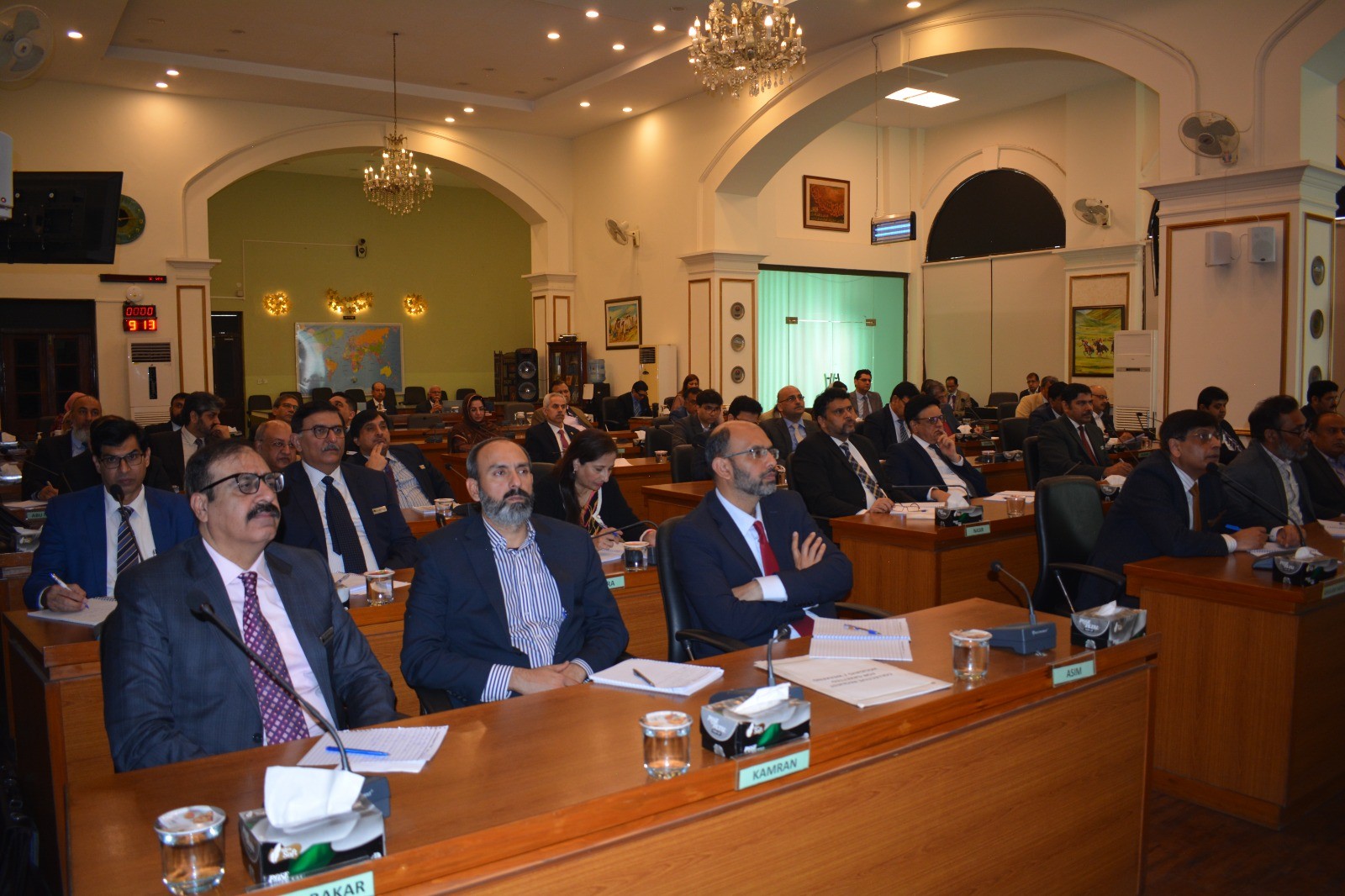
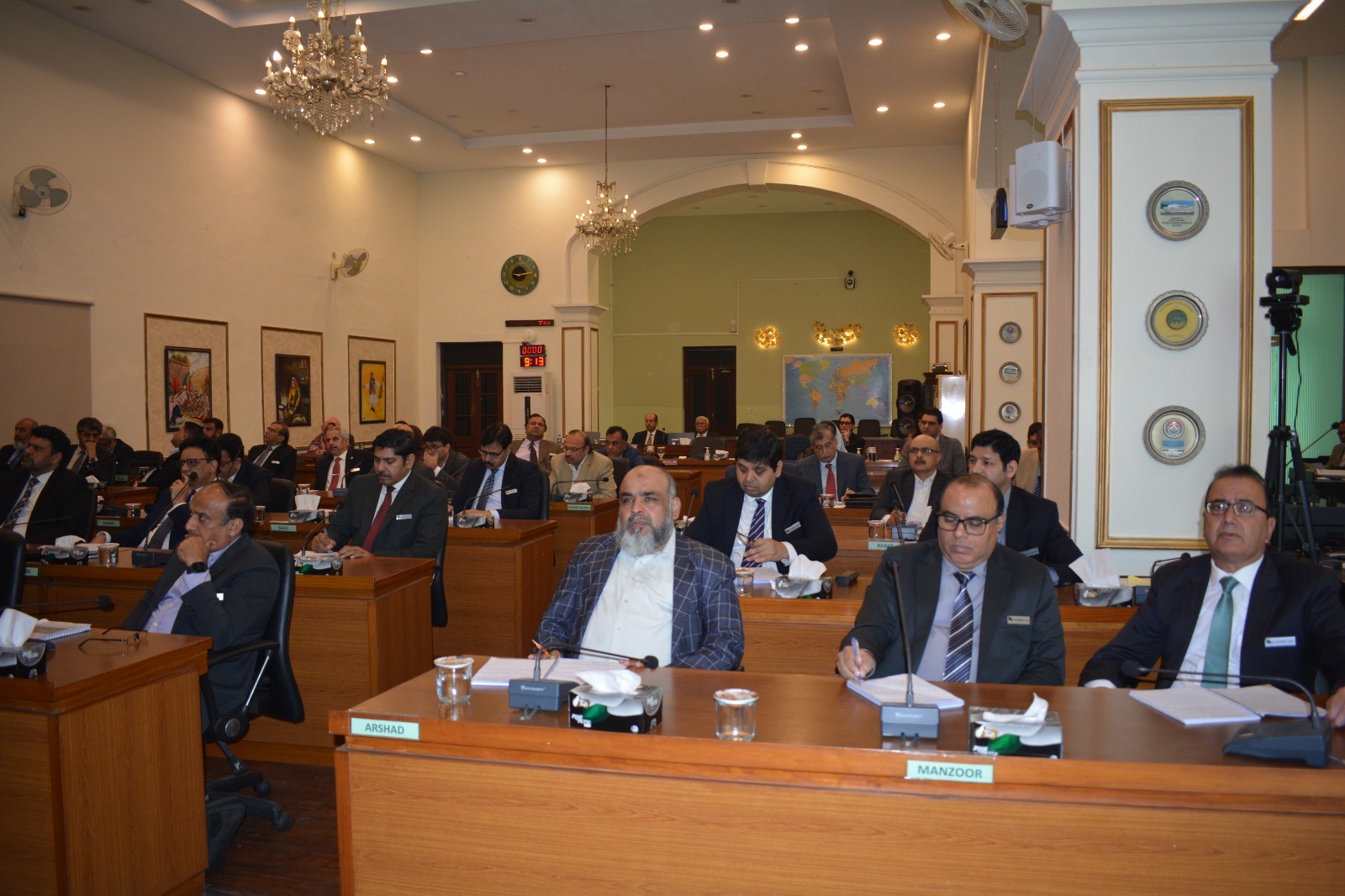
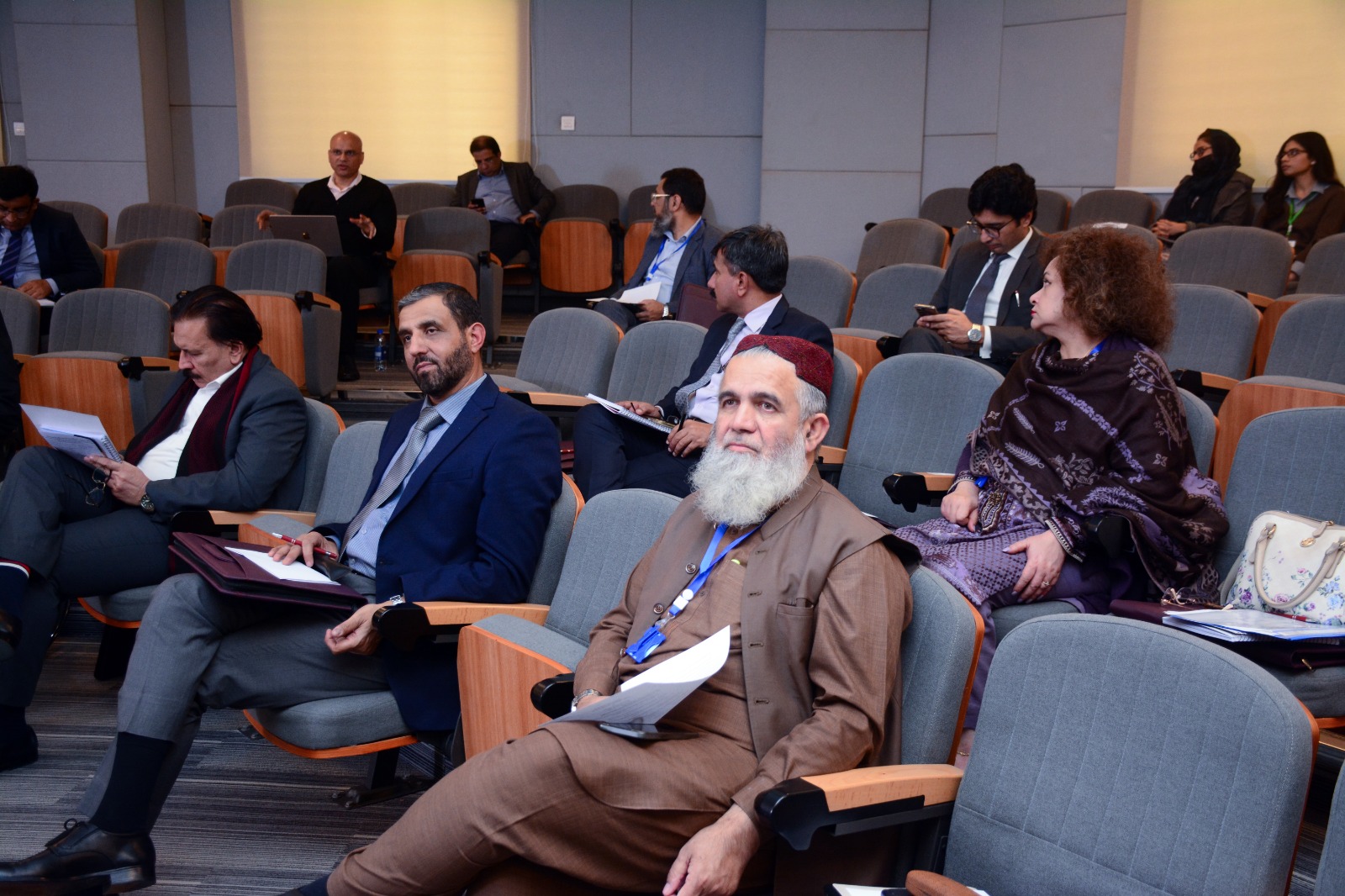
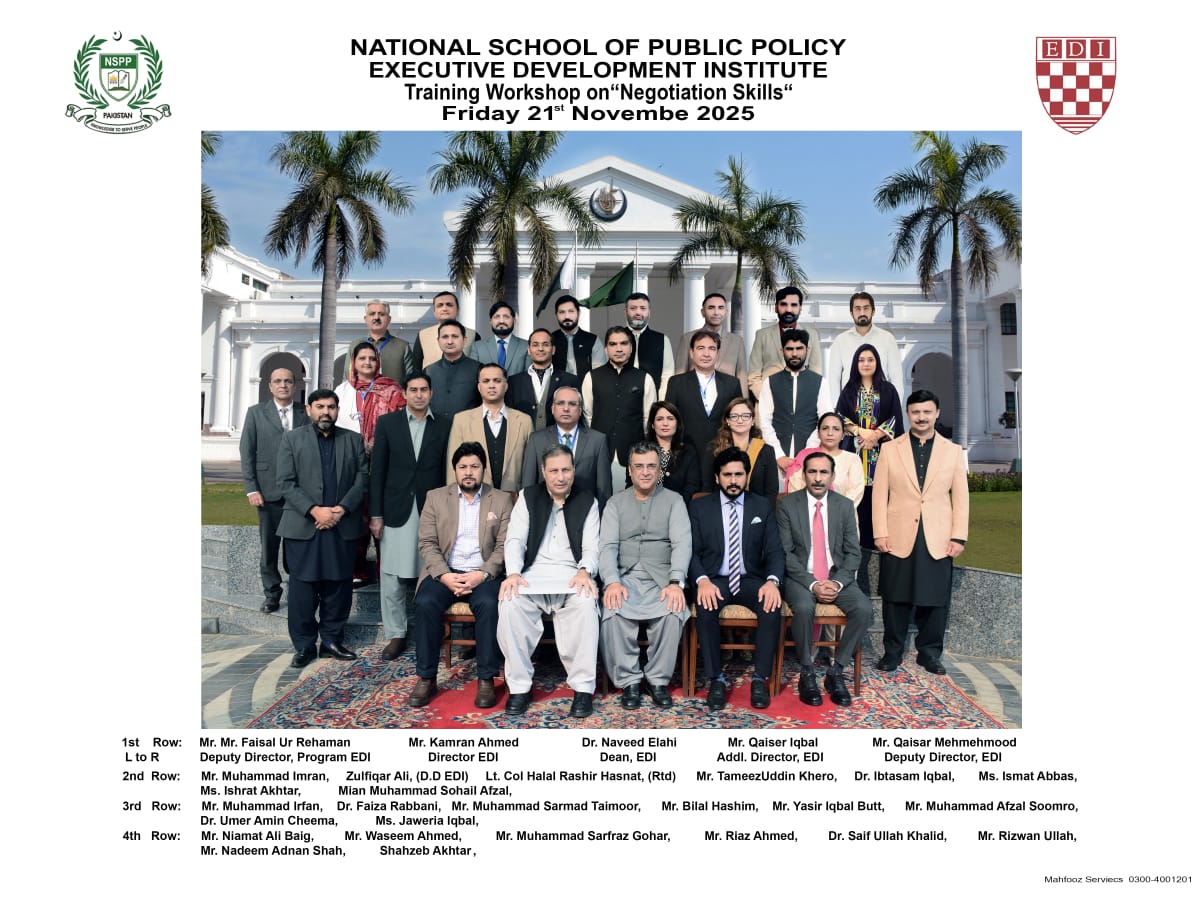
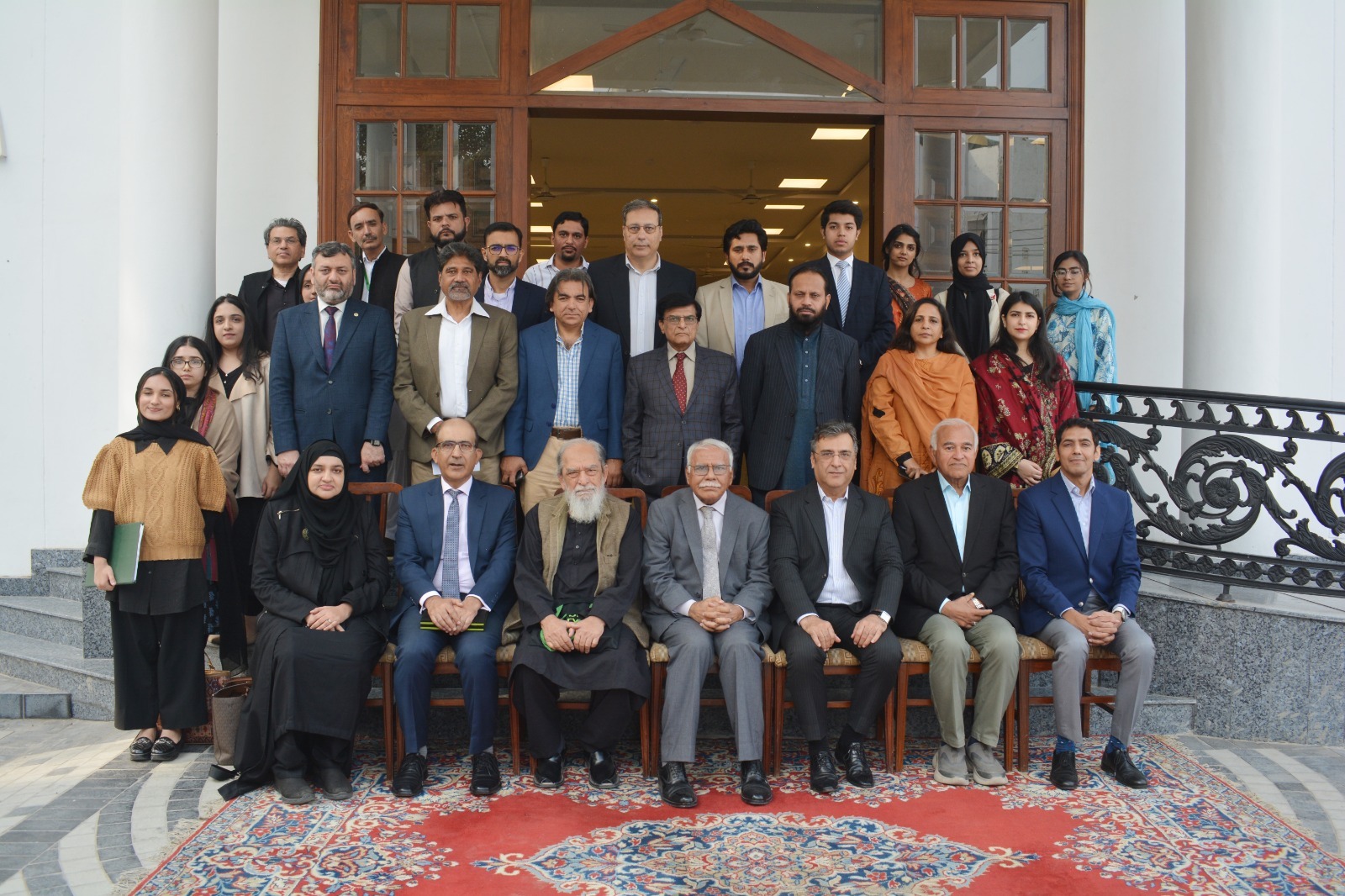
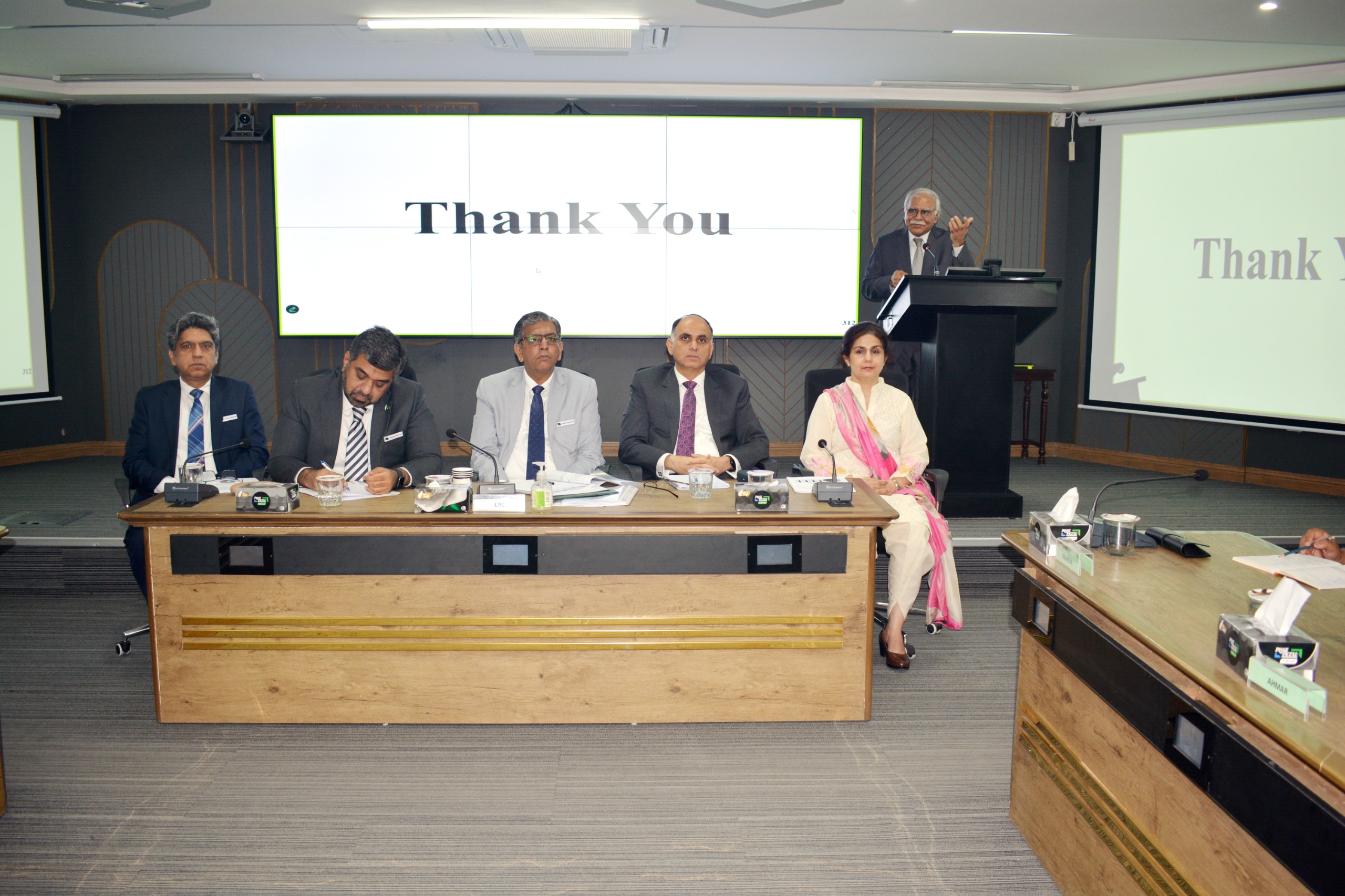
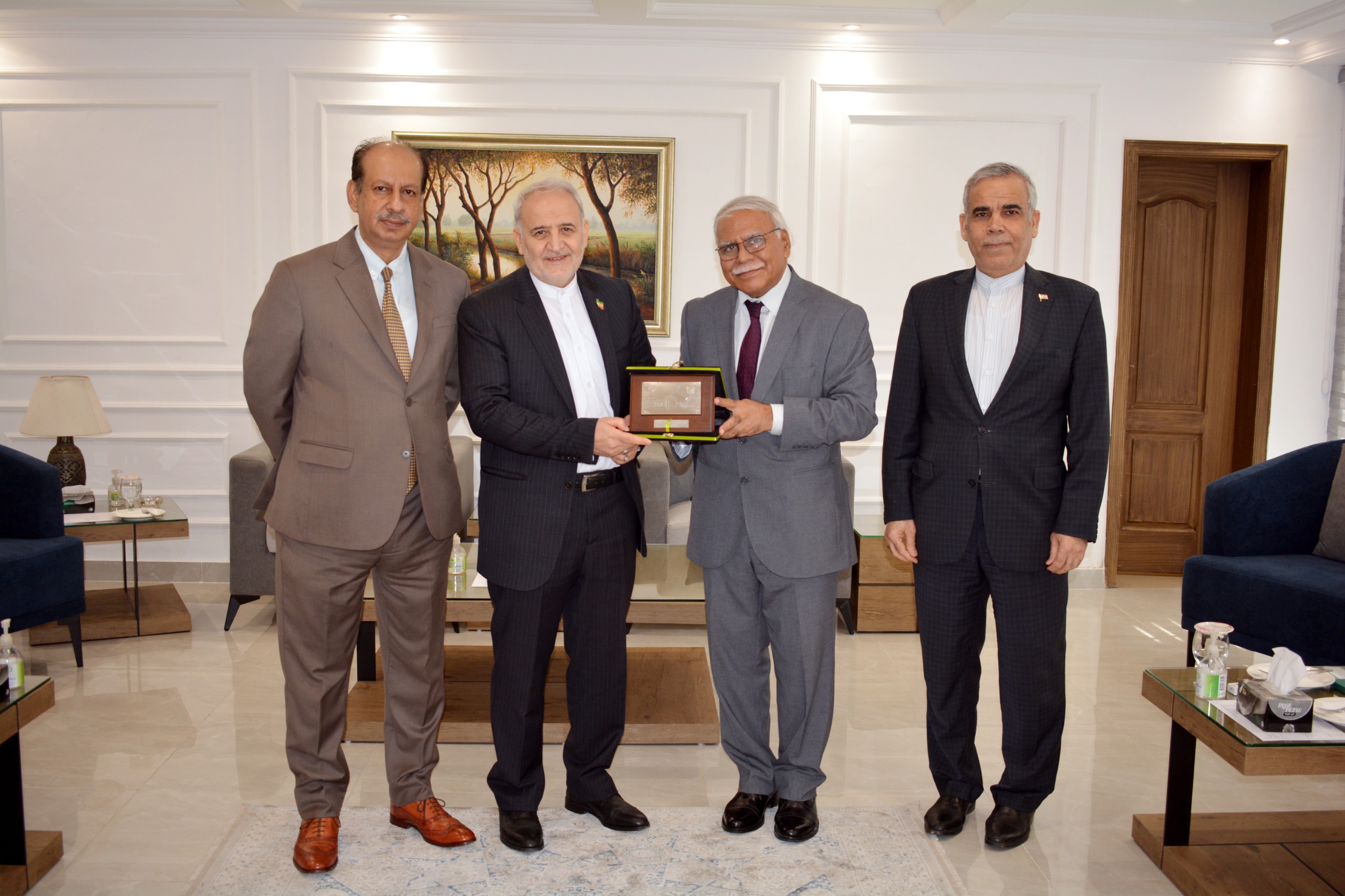
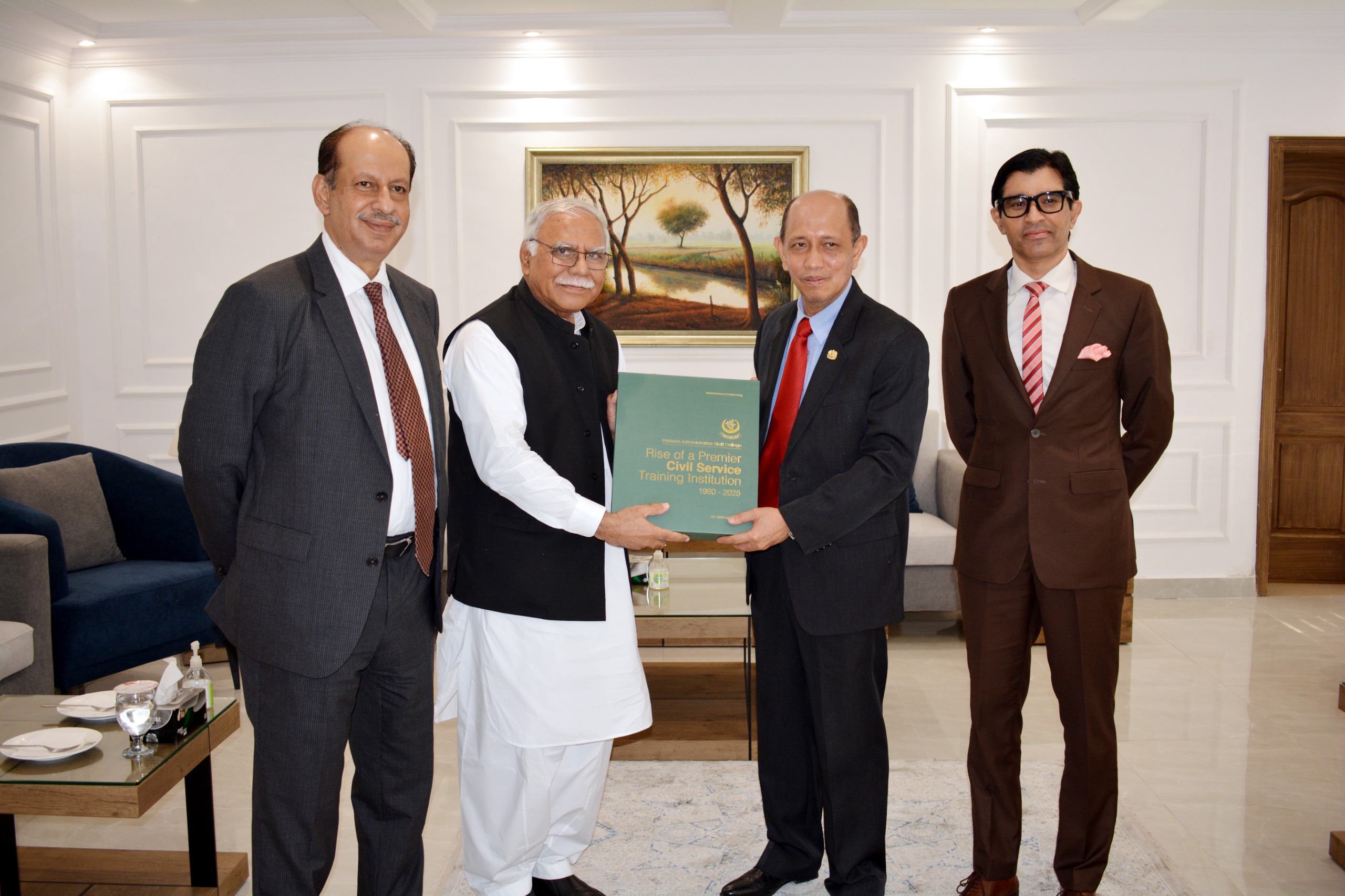
On 19th February, 2025, the Pakistan Administrative Staff College hosted an important panel discussion as part of the 122nd National Management Course, titled ‘Critical Issues Besetting Pakistan’s Economy.’ The panel featured insights from Dr. Shujat Ali, Dr. Ali Hasanain, and Dr. Khaqan Najeeb. Their analysis of Pakistan’s economic challenges and proposed solutions were followed by a dynamic question-and-answer session, enhancing the depth of the discussion.
Starting the discussion, Dr. Shujat Ali in his presentation, ‘Economic Logic and Bureaucratic Decision Making,’ focused on the structural inefficiencies plaguing Pakistan’s economy. He detailed how protectionist policies, extensive use of subsidies, and tax concessions have significantly weakened the tax base, leading to a lack of competitiveness and low productivity. He criticized the prevailing economic governance that prioritizes short-term gains over strategic, long-term planning, which has led to the decline of key economic institutions like the Planning Commission and the Finance Ministry. He advocated for a rigorous application of cost-benefit analyses in public policy to ensure decisions are both economically beneficial and equitable, fostering a more robust and dynamic economy.
Moving on, Dr. Ali Hasanain in his talk, analyzed the persistent underperformance of Pakistan’s economy, attributing it to several key factors including currency mismanagement, political instability, and ineffective trade policies. He described how these elements contribute to economic volatility and create barriers to sustainable growth. Dr. Hasanain highlighted the problematic practice of borrowing for consumption supported by a politically charged strong PKR, which has not served the economy well. He called for substantial reforms in trade policy and tax reform, emphasizing the need to correct the anti-export bias and improve integration with global value chains to enhance economic stability and growth.
Towards the end, Dr. Khaqan Najeeb critically evaluated Pakistan’s dependence on the International Monetary Fund. He noted that while IMF interventions are crucial, they are insufficient to rectify the fundamental flaws in Pakistan’s economic framework. He argued for a comprehensive overhaul aimed at repairing the growth model, focusing on enhancing human resources, achieving fiscal sustainability, and promoting a market economy that supports high productivity and exports. He stressed the importance of adopting a strategic approach to governance and economic planning, necessary to alleviate the social impact of the IMF’s adjustment costs and to guide Pakistan towards a path of sustainable economic development.