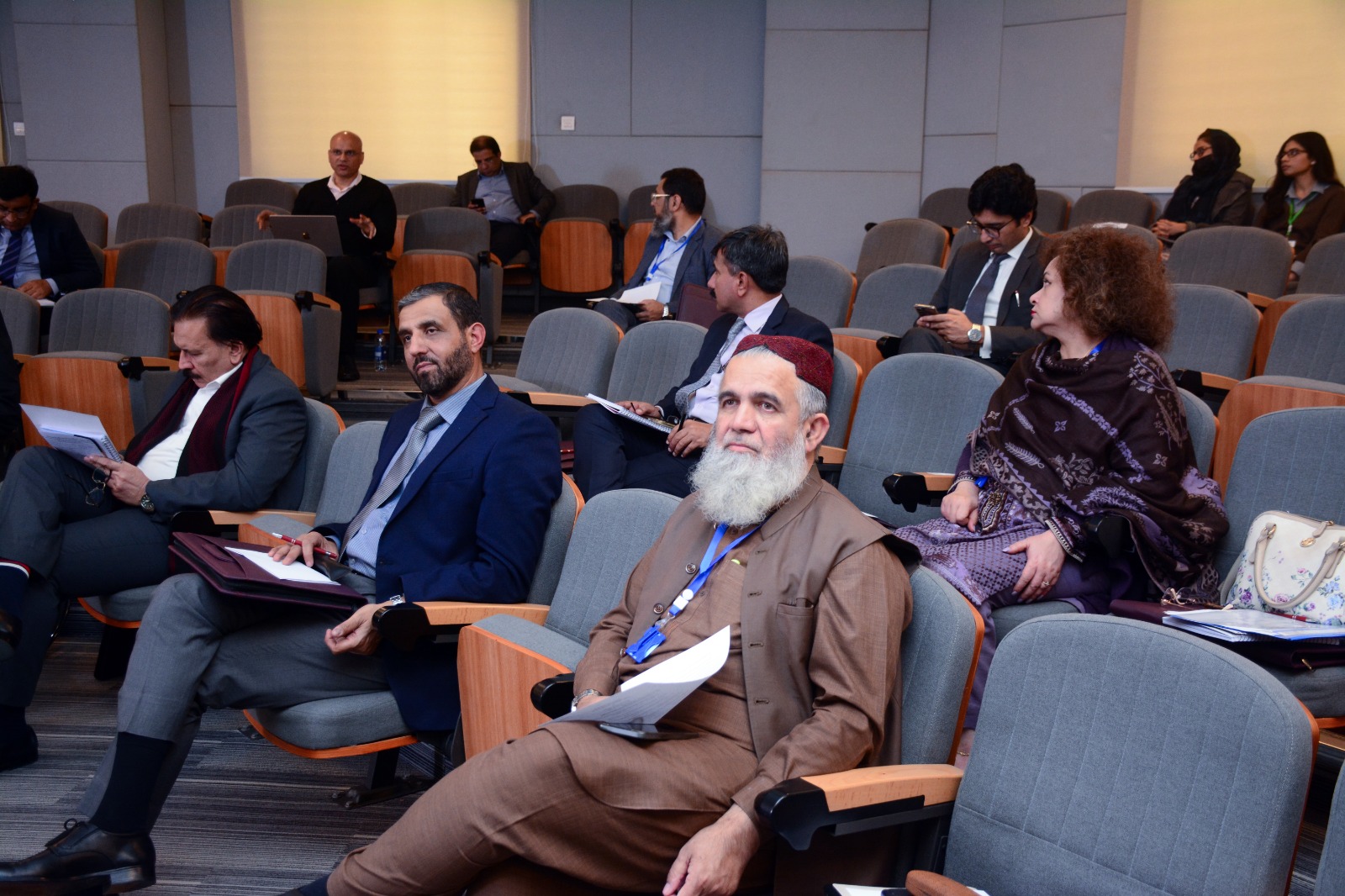
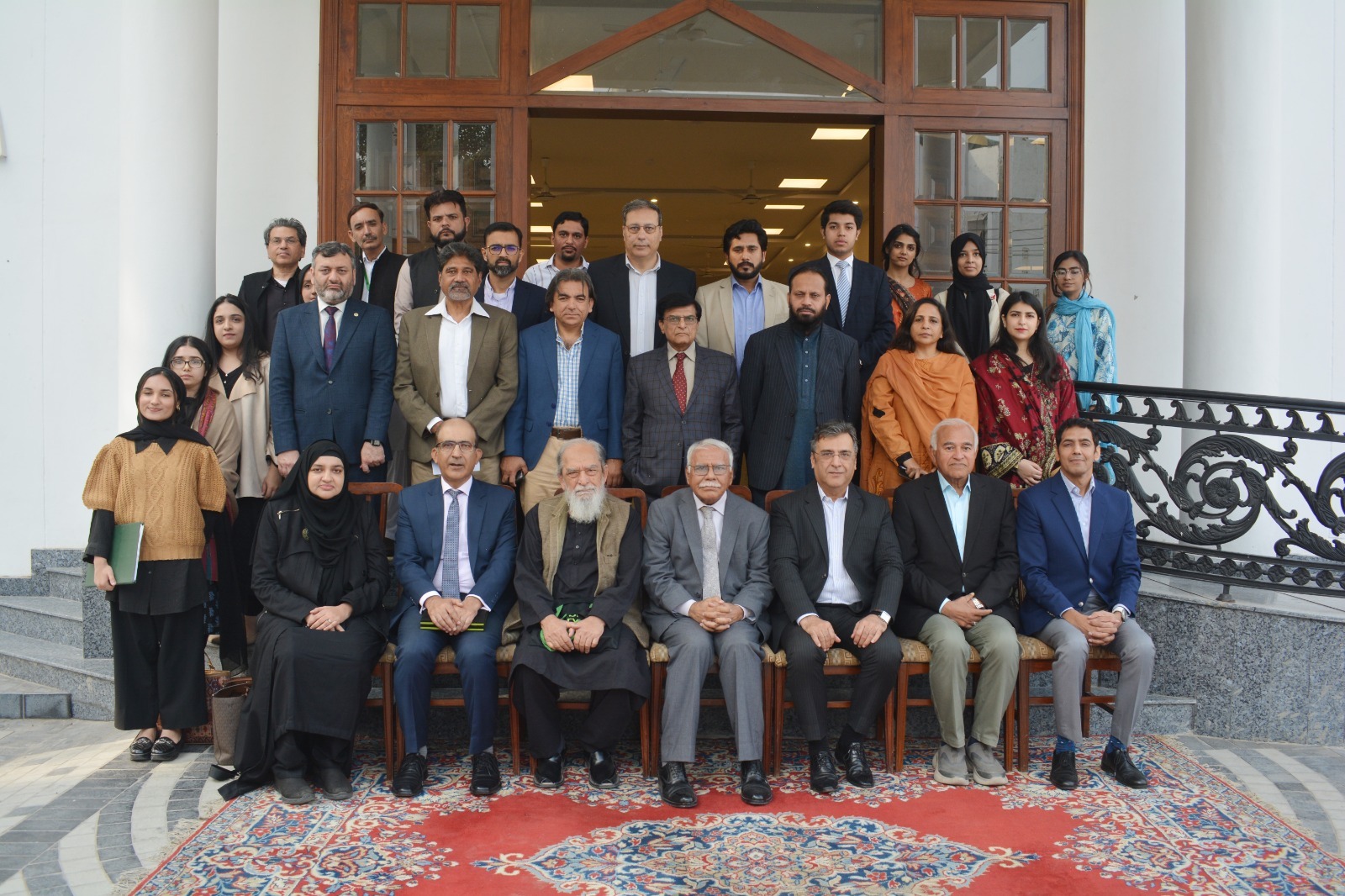
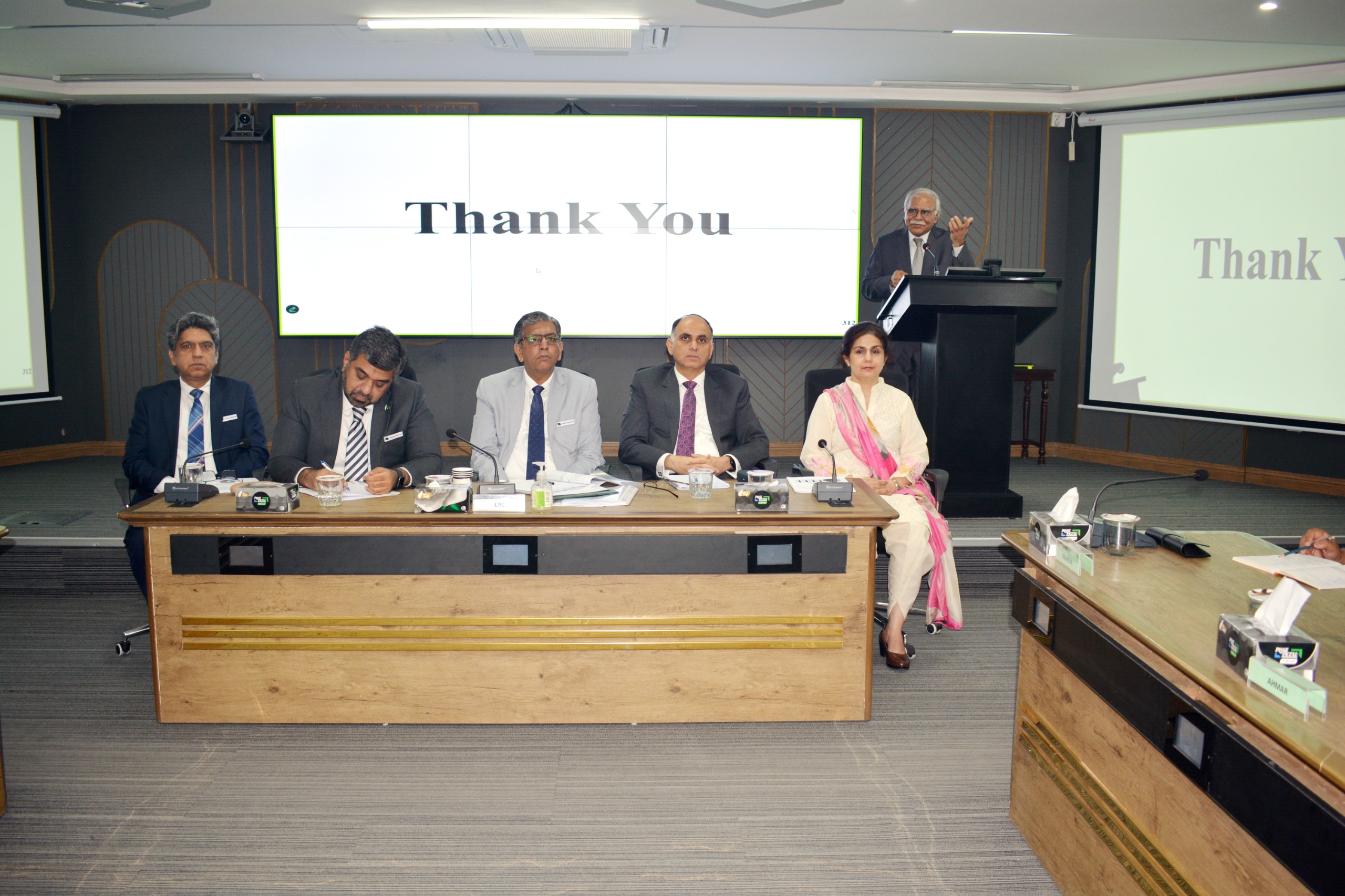
Mr. Shahid Javed Burki, former World Bank Vice President and seasoned economist, delivered an insightful keynote on Pakistan’s public sector management, blending historical reflections with forward-looking strategies. Reflecting on his 26-year tenure at the World Bank, including pivotal work in China, Mr. Burki recounted how Pakistan’s founding fathers, including Quaid-e-Azam Muhammad Ali Jinnah, rallied industrialists like the Habib, Adamjee, and Dawood families to stabilize the nascent state’s finances. He also shared his instrumental role in conceptualizing the China-Pakistan Economic Corridor, revealing that China’s leadership first proposed the connectivity vision to him in the 1990s, urging him to advocate it within Pakistan’s power corridors. Highlighting Pakistan’s demographic dividend—a median age of 24 compared to China’s 45—he stressed the urgency of educating youth, particularly women, to harness opportunities in AI and global labor markets. He proposed establishing AI hubs along major motorways and praised Pakistani women’s computational aptitude, citing BIPP’s scholarships for low-income female students as a step toward unlocking this potential.
Mr. Burki critiqued historical missteps, such as Zulfiqar Bhutto’s nationalization policies, which dismantled Ayub Khan’s “Golden Age” of industrialization, and contrasted this with China’s agricultural modernization. He urged Pakistan to shift from low-value crops like wheat to high-value produce, aligning with global demands. Emphasizing optimism, he lamented Pakistanis’ pervasive negativity, quoting India’s former Deputy PM L.K. Advani: “We Indians love India; you Pakistanis do not like Pakistan.” Closing on a hopeful note, Mr. Burki outlined his latest book’s vision of Pakistan emerging as a regional economic leader—contingent on reforms in governance, innovation, and gender inclusion.
The session concluded with a dynamic Q&A, where Mr. Burki reiterated the need for strategic alliances, youth empowerment, and a cultural shift toward national pride to transform Pakistan’s economic trajectory. His blend of historical wisdom, global insights, and pragmatic solutions left the audience with a renewed sense of possibility.