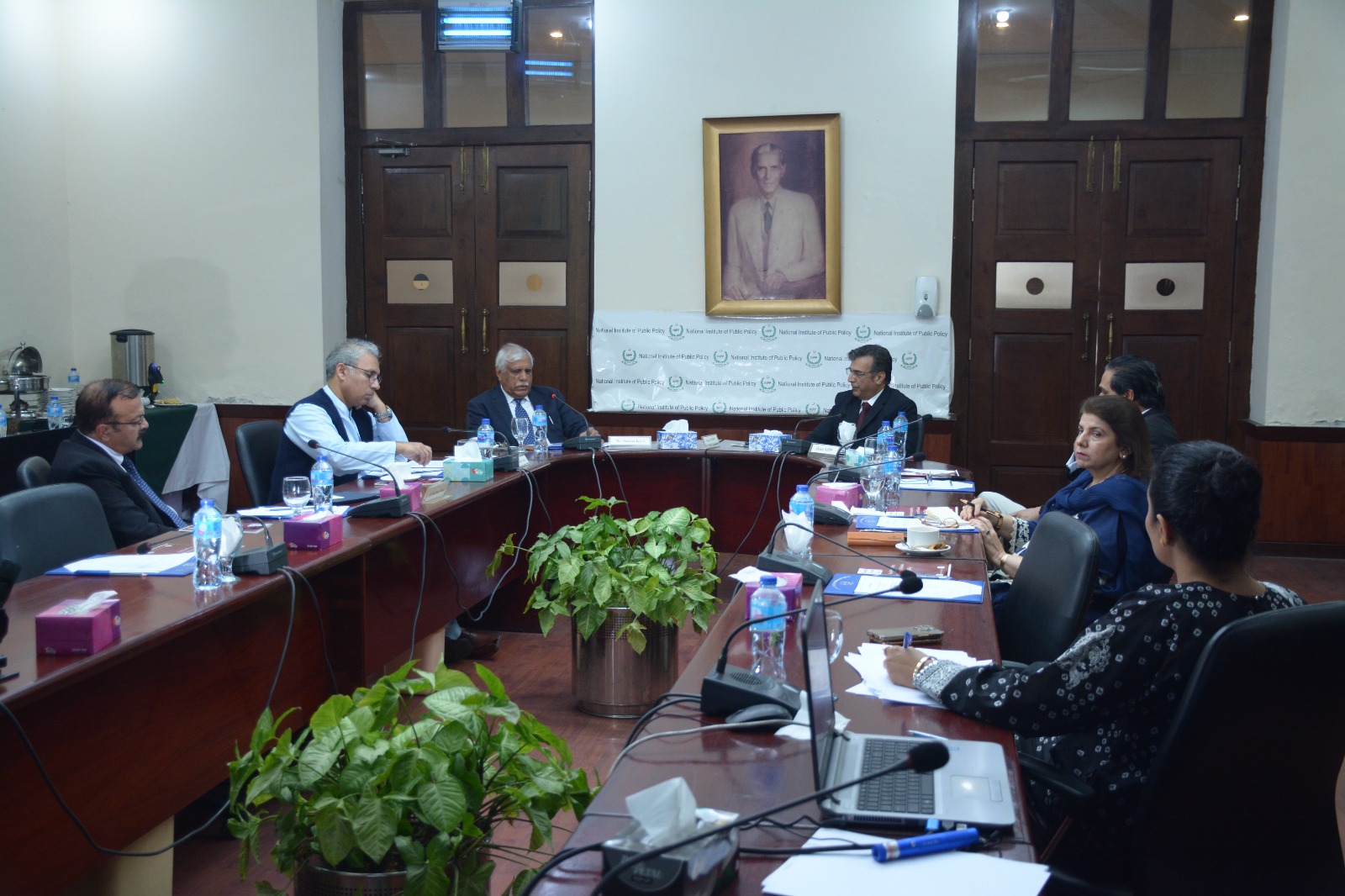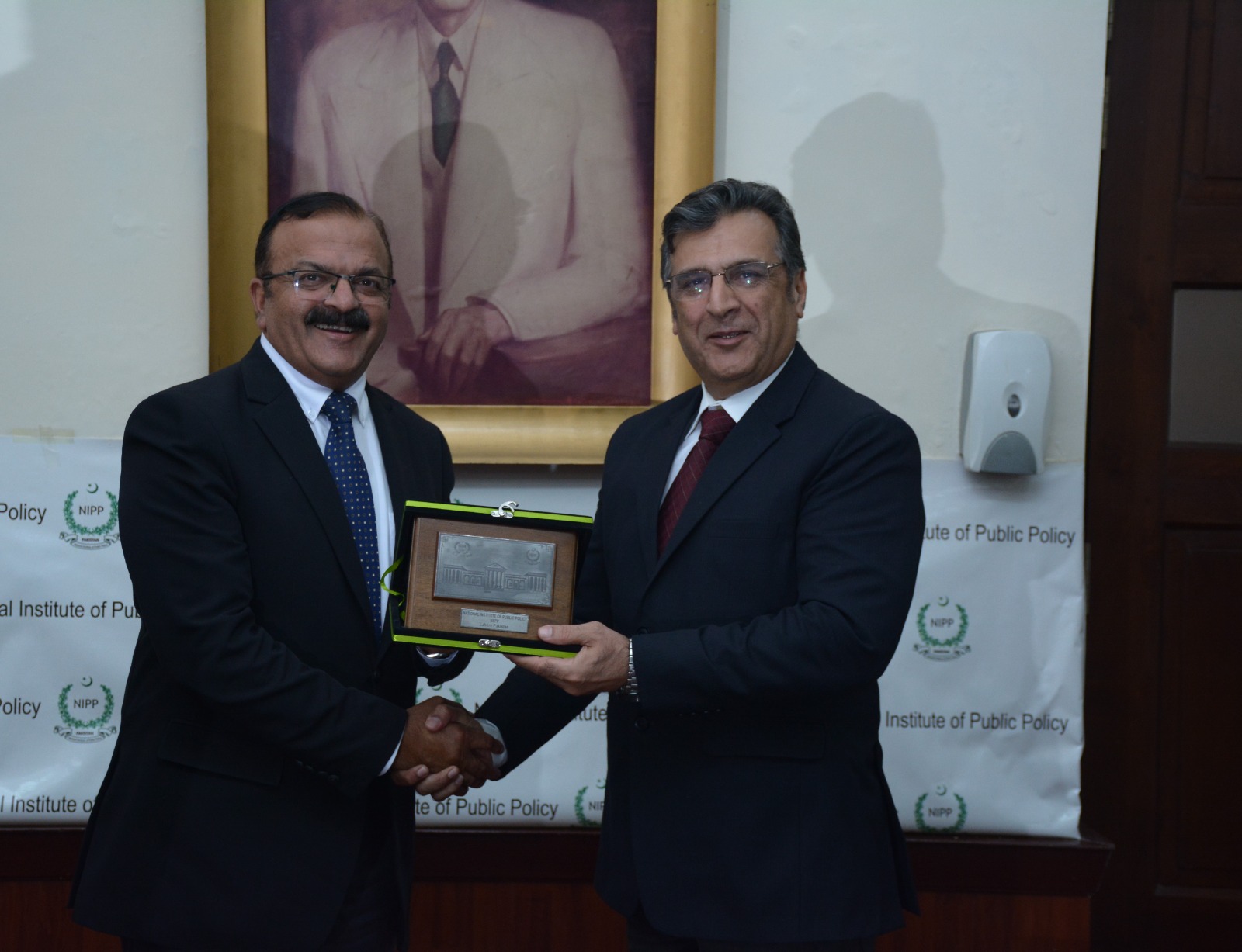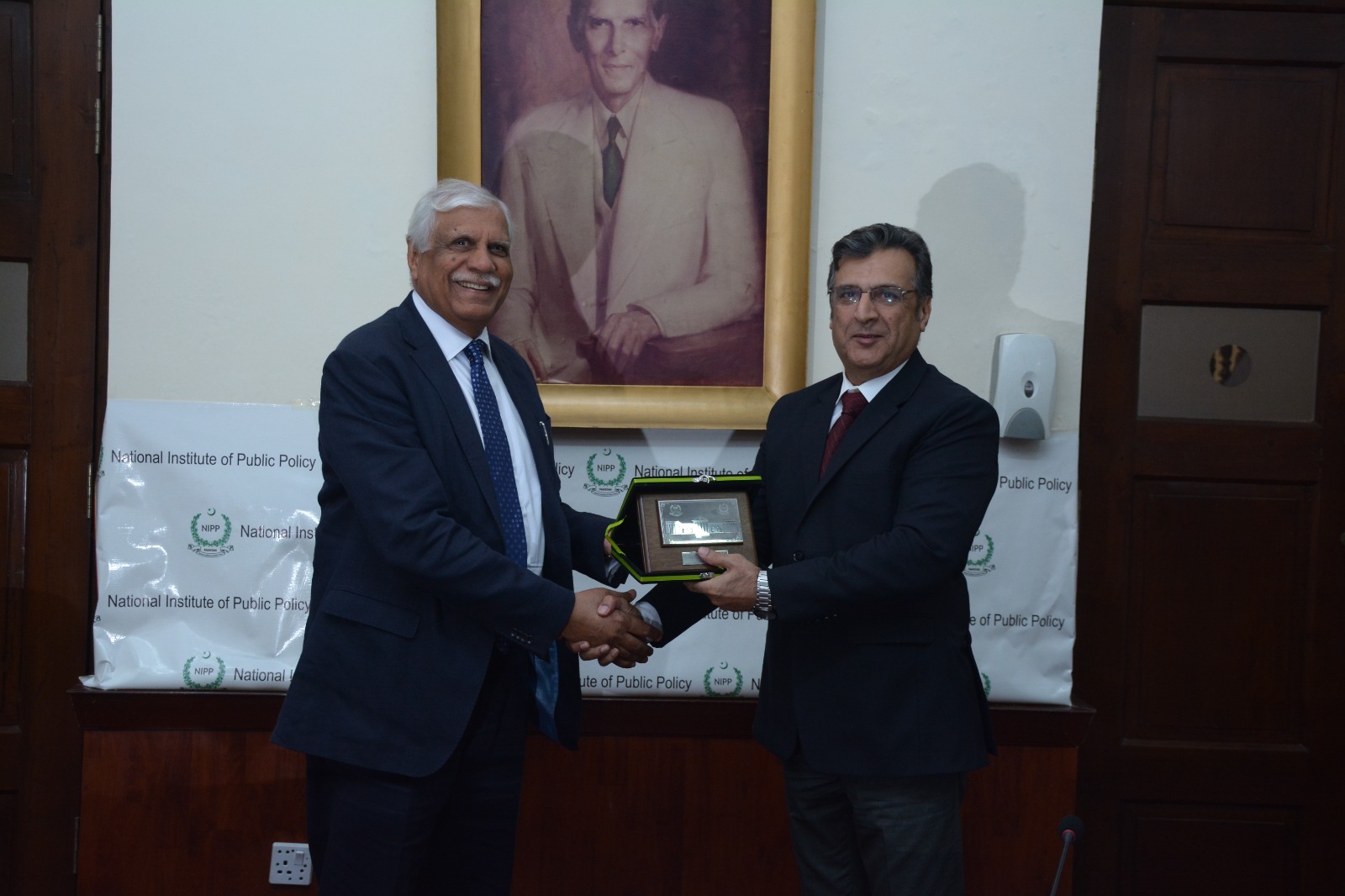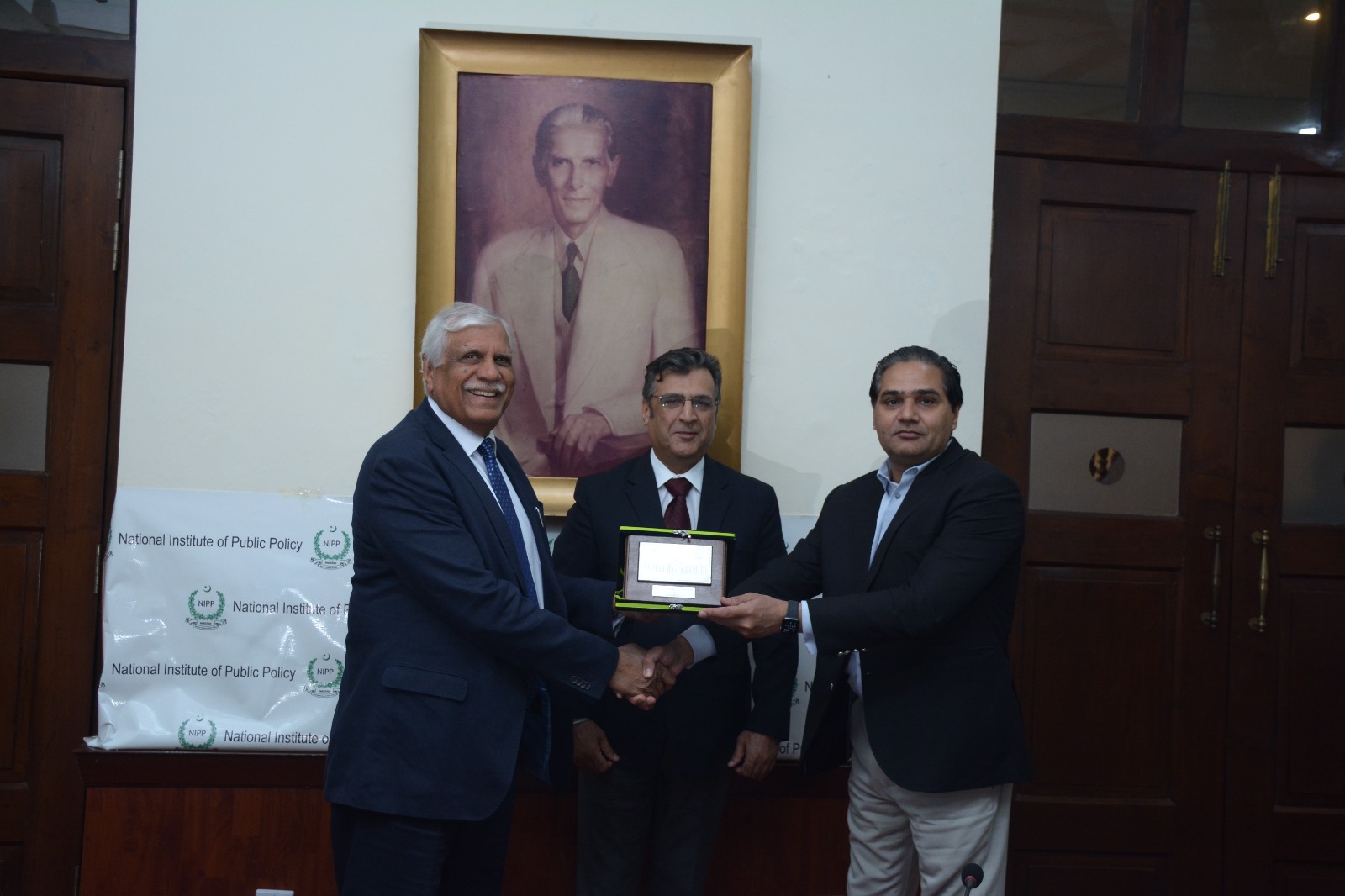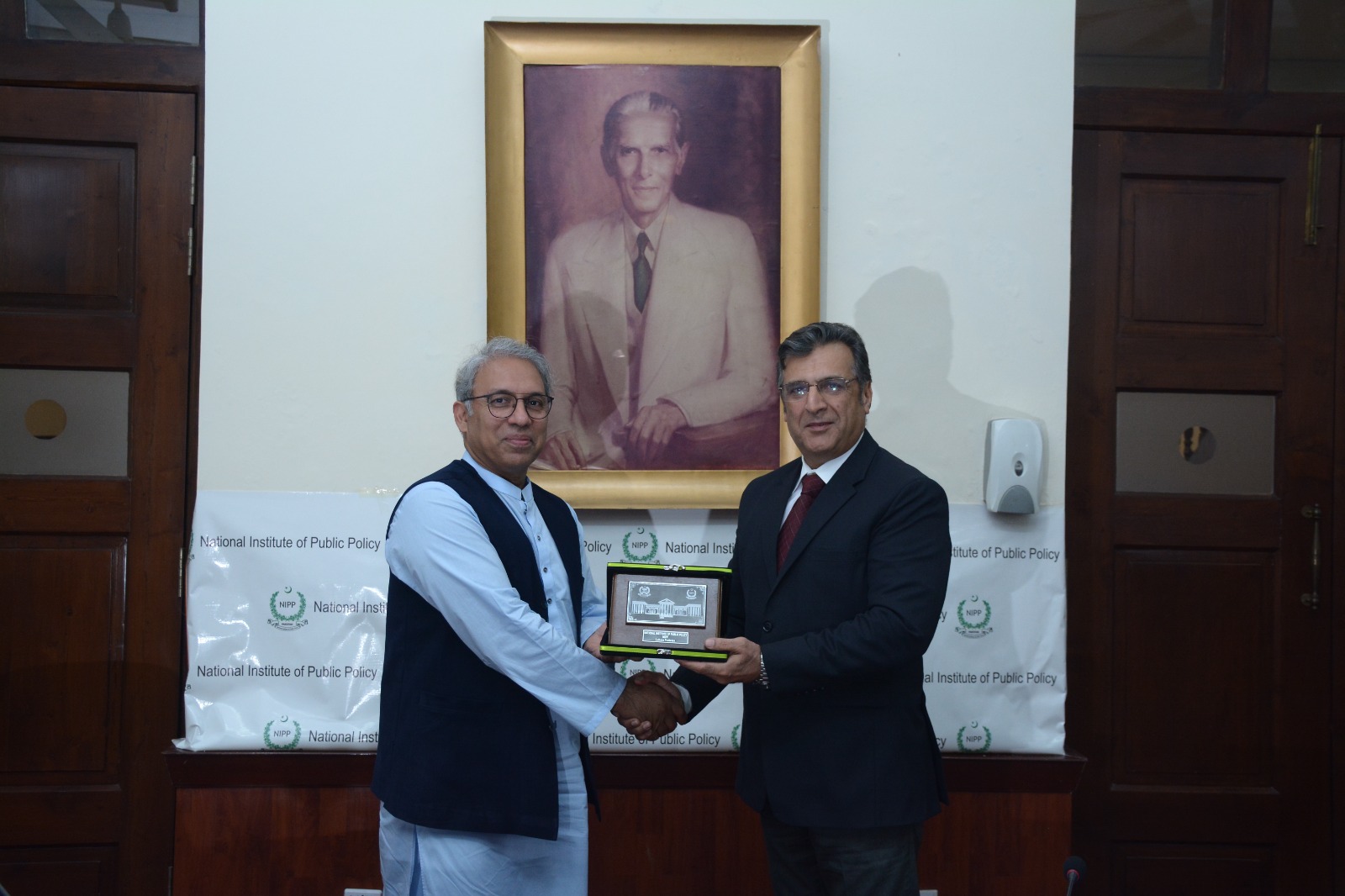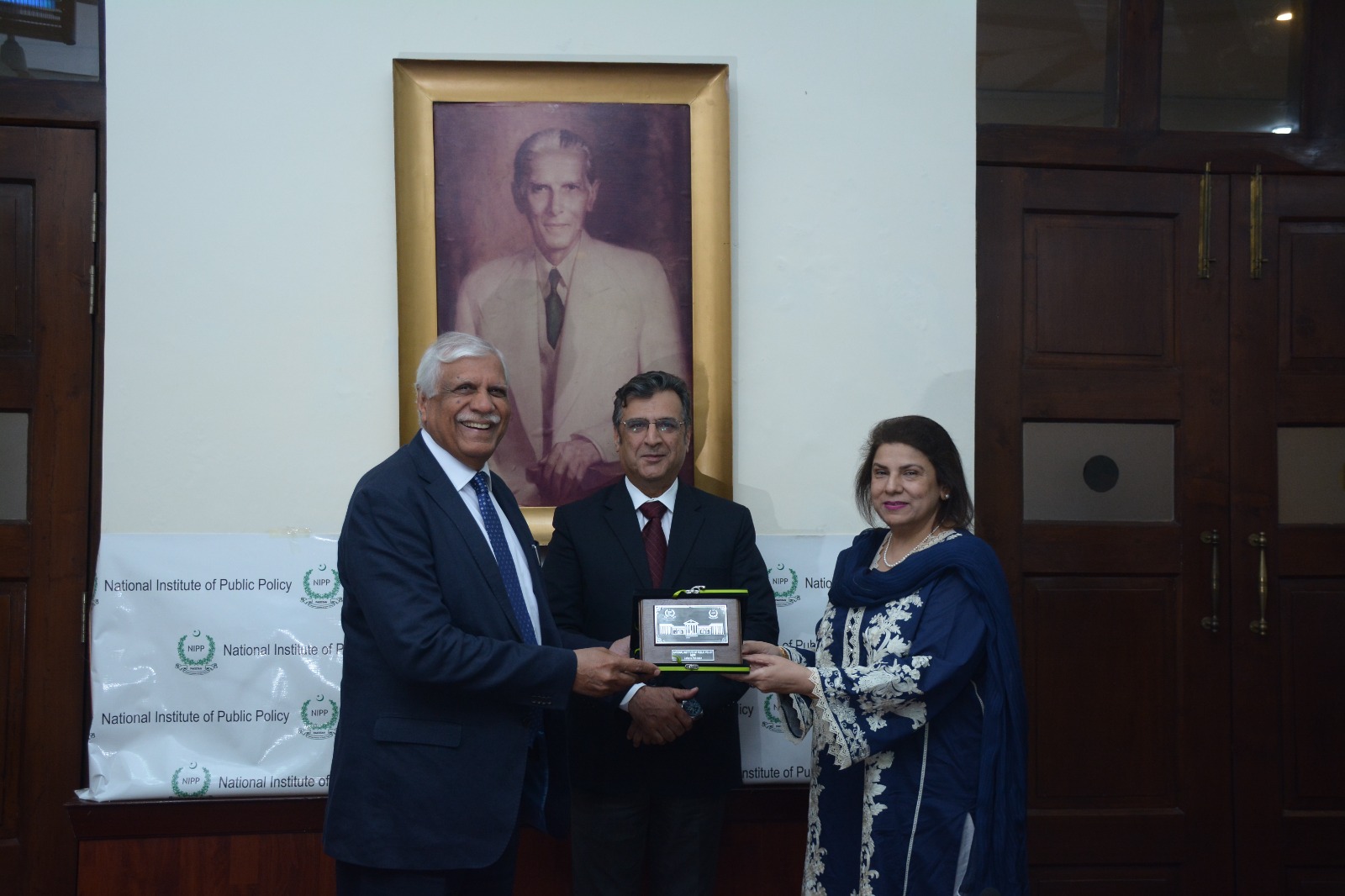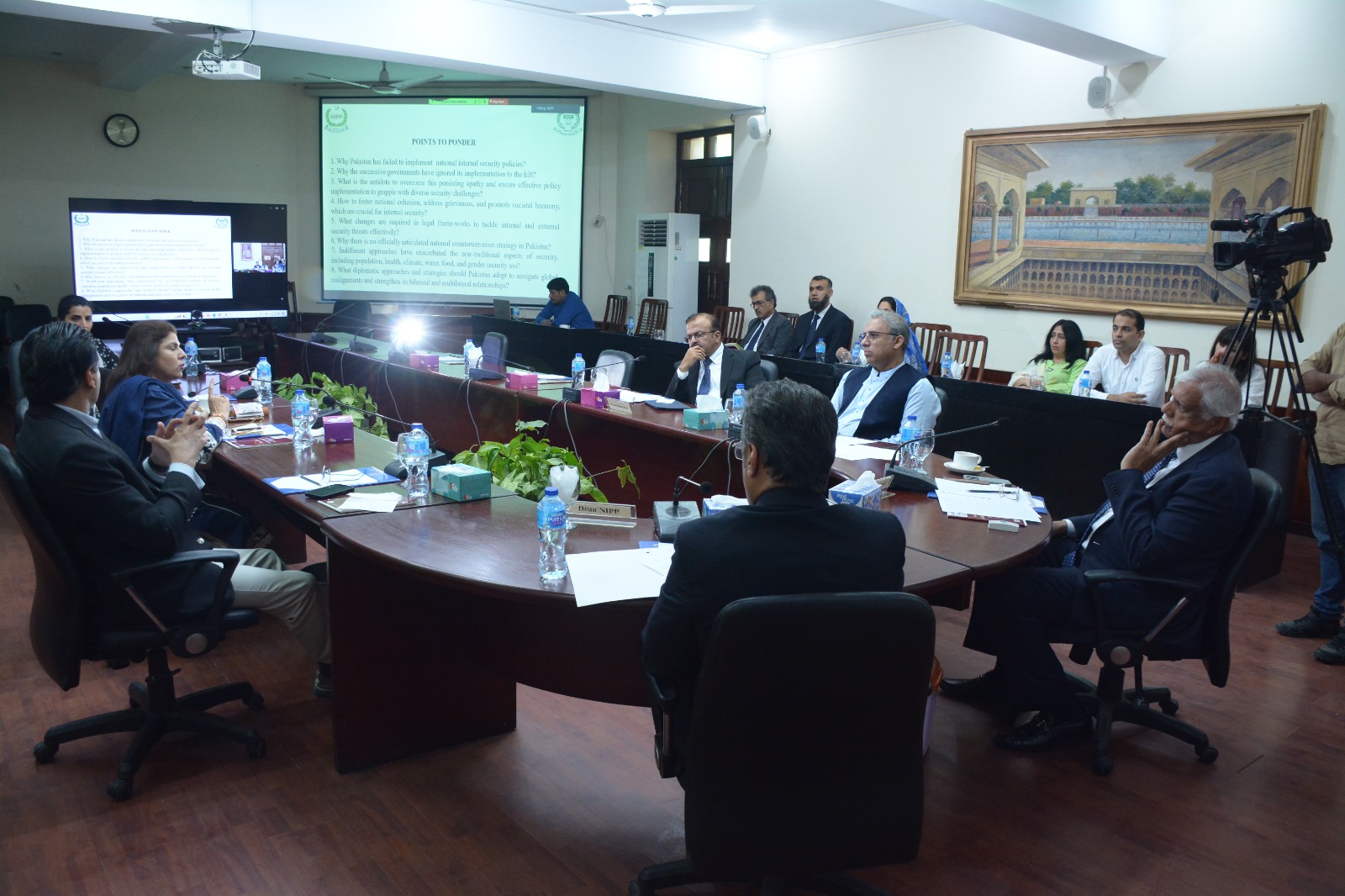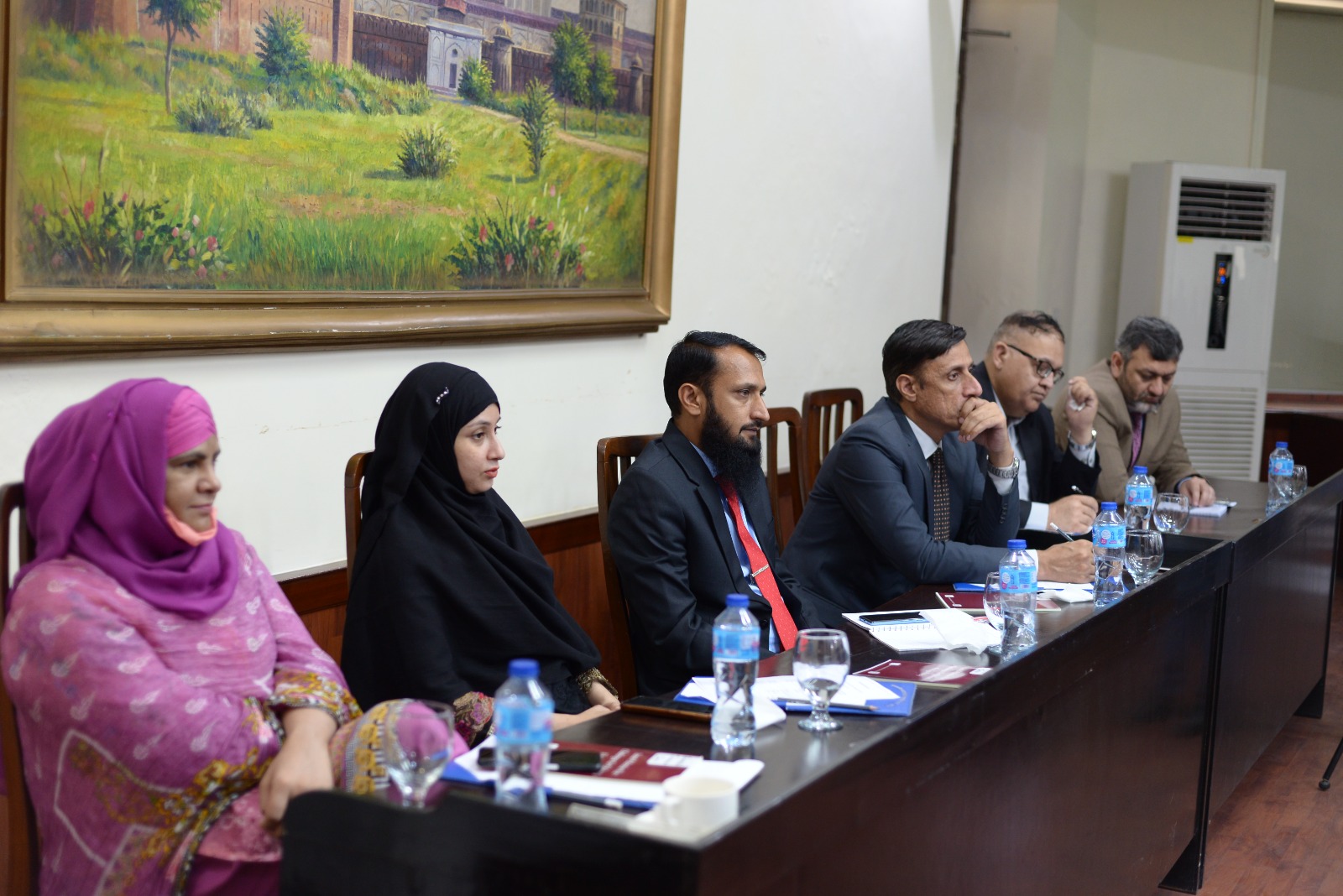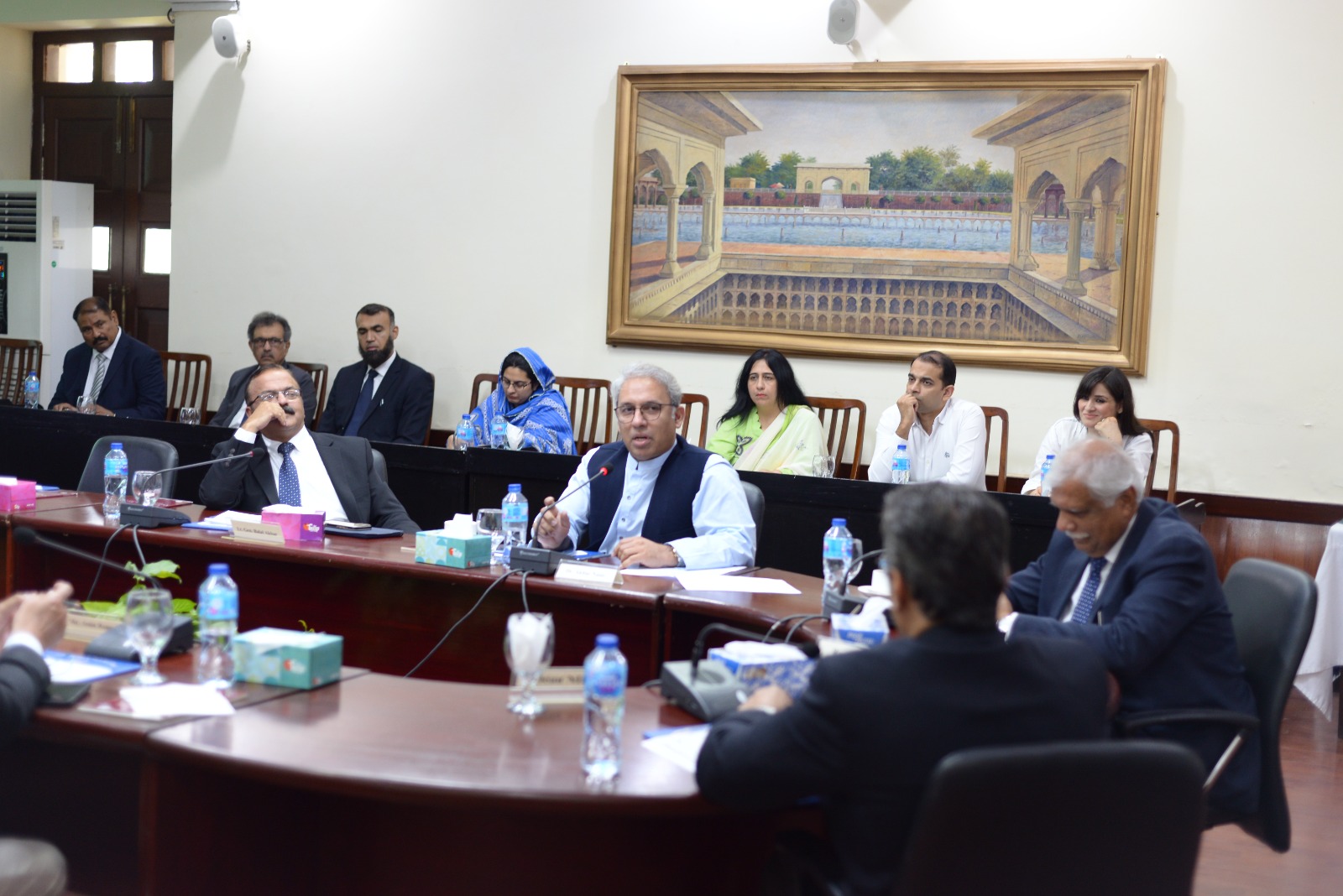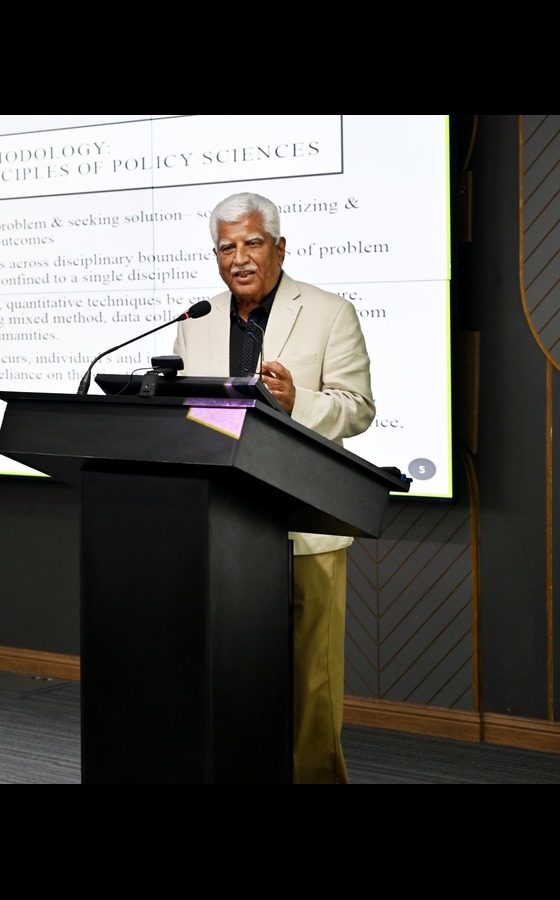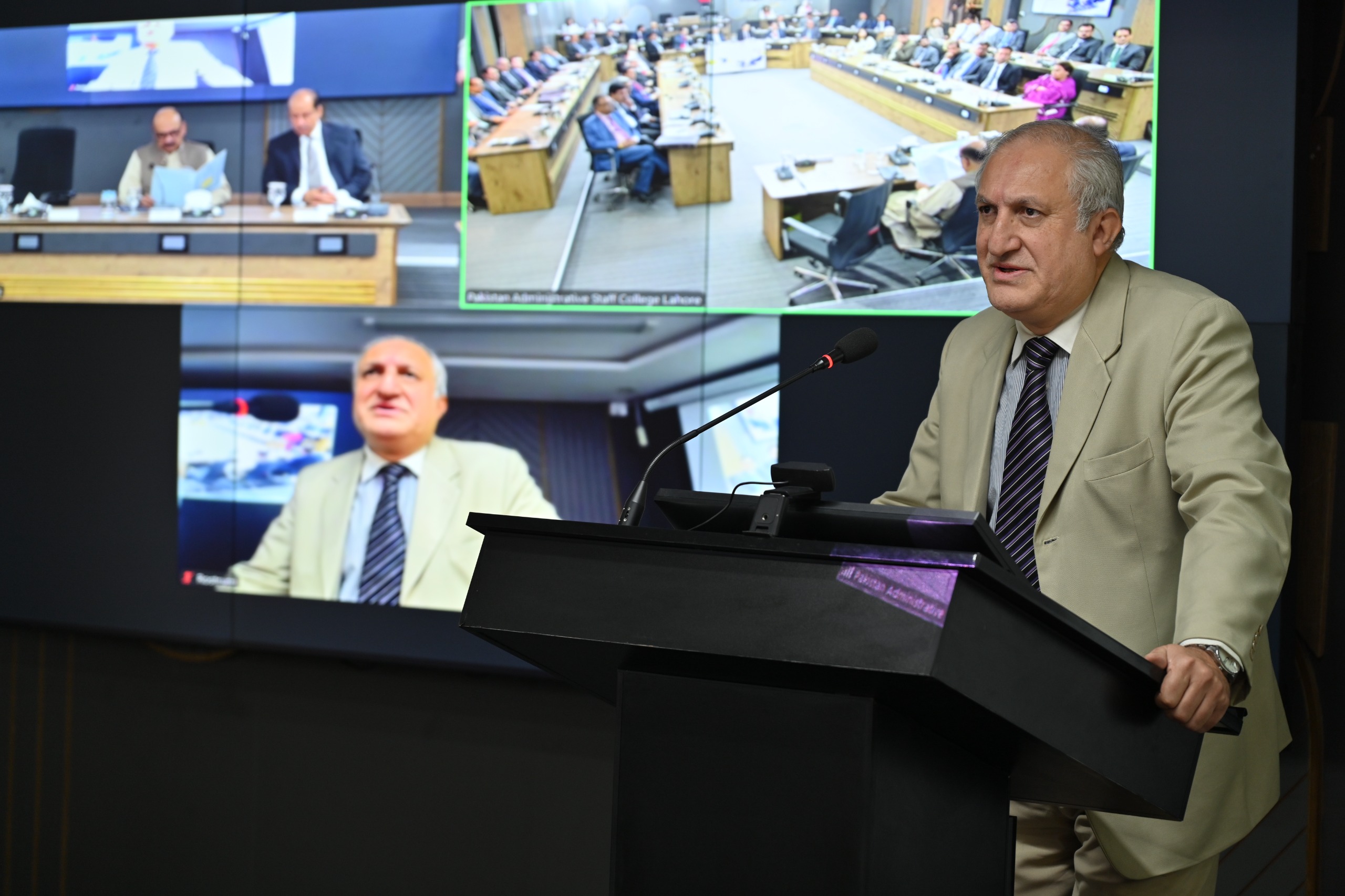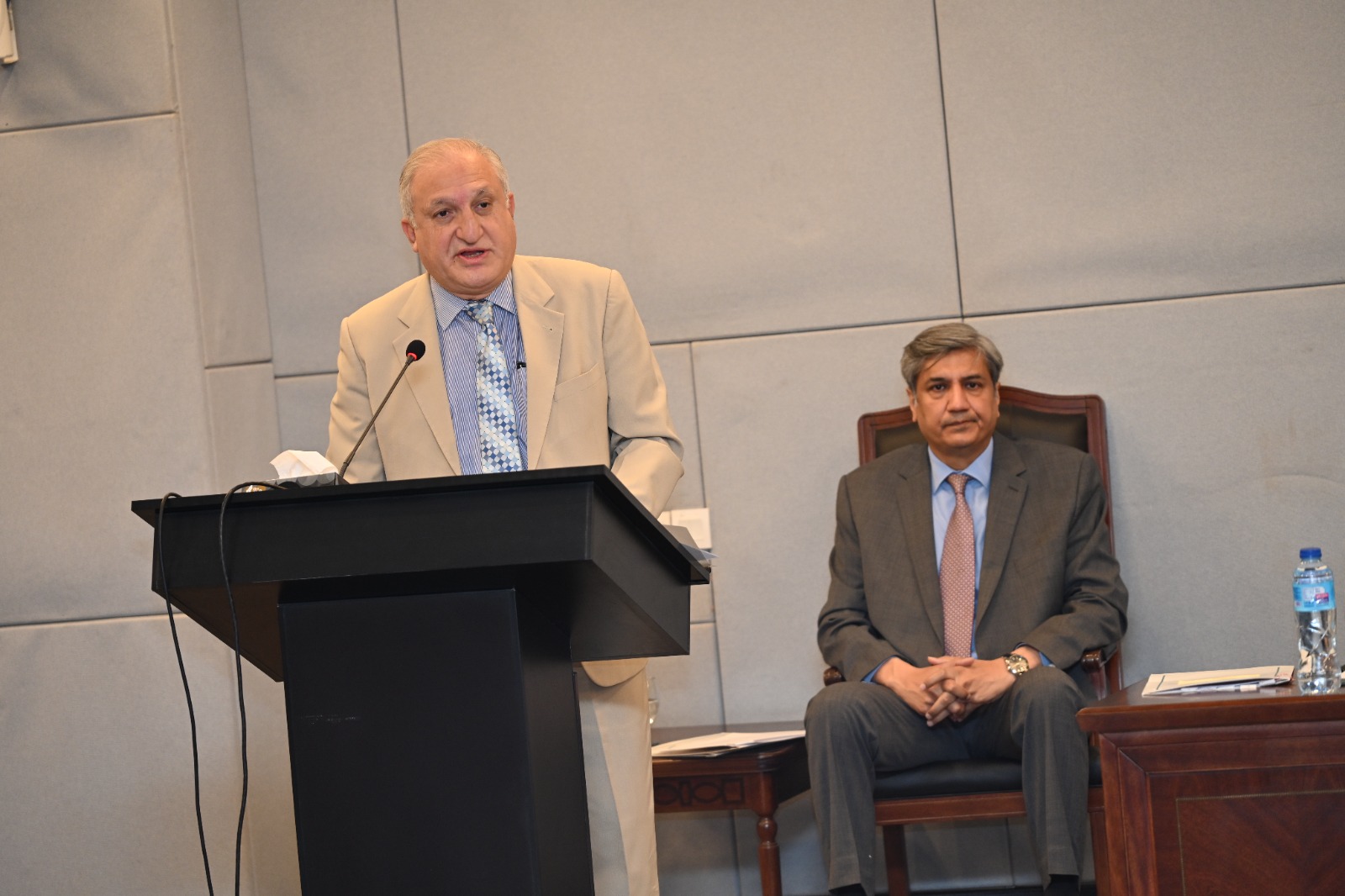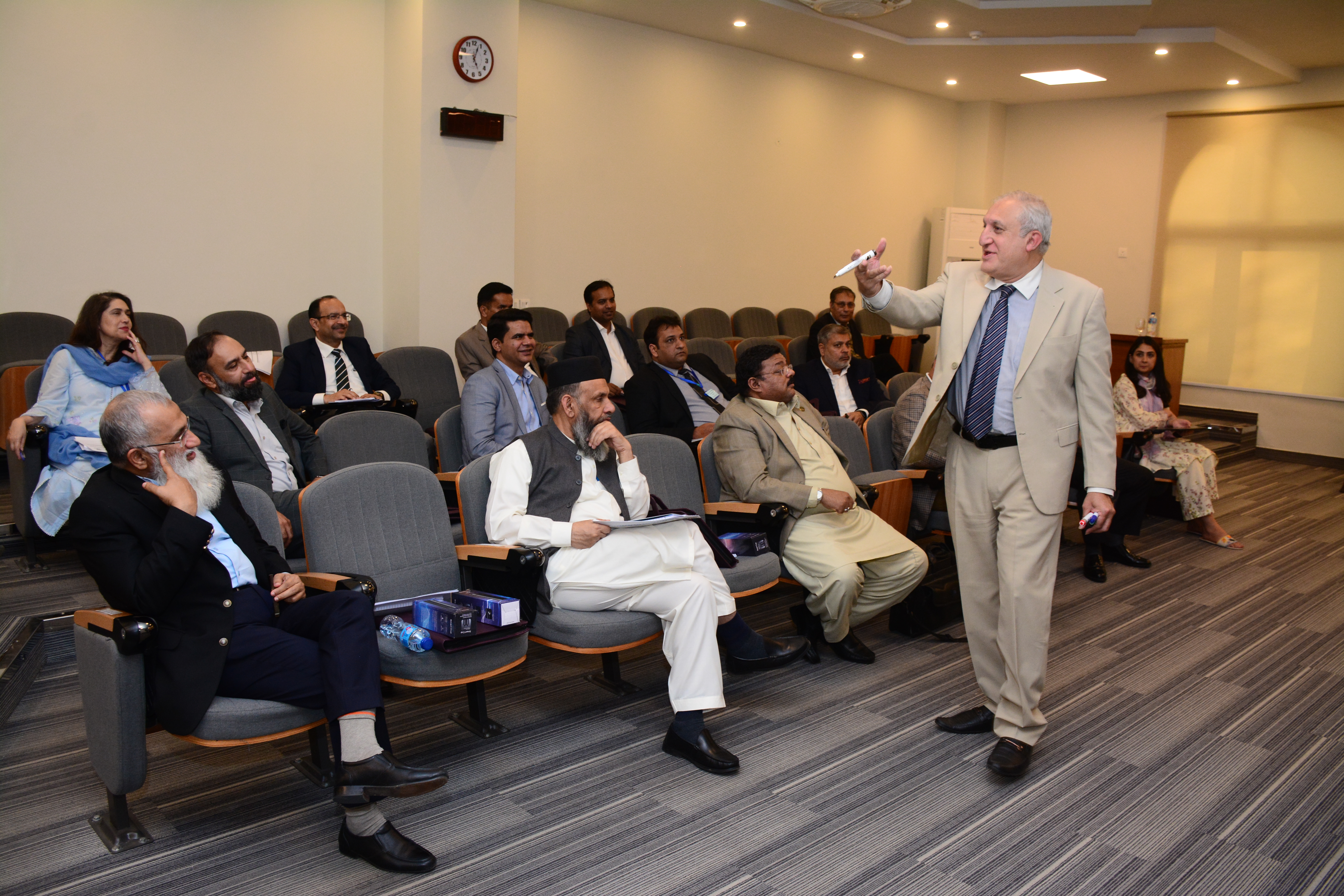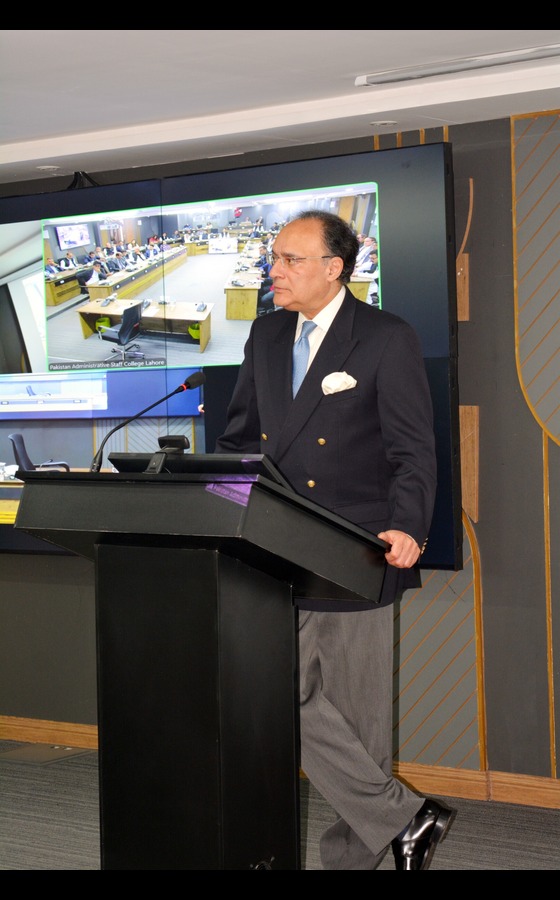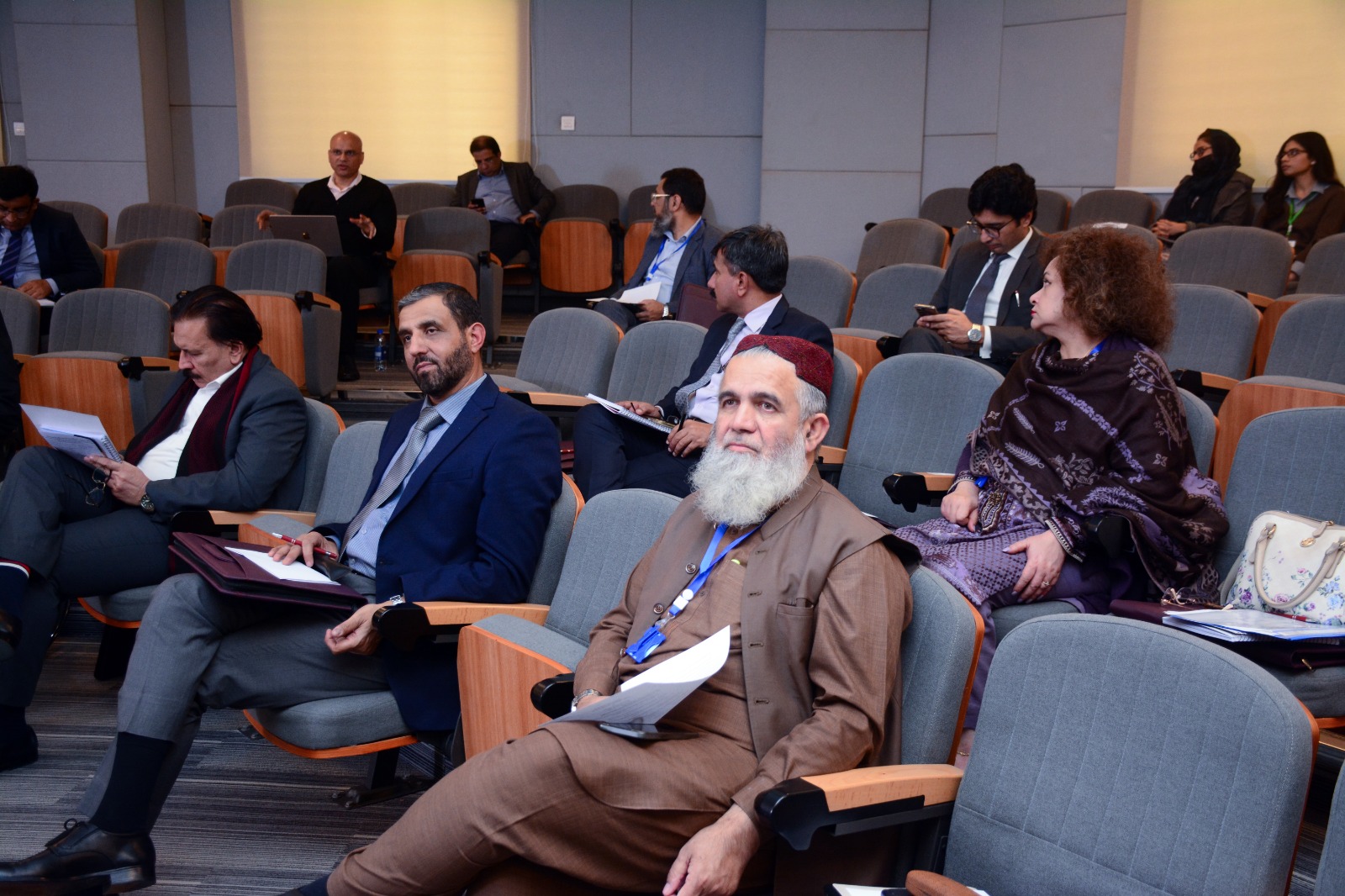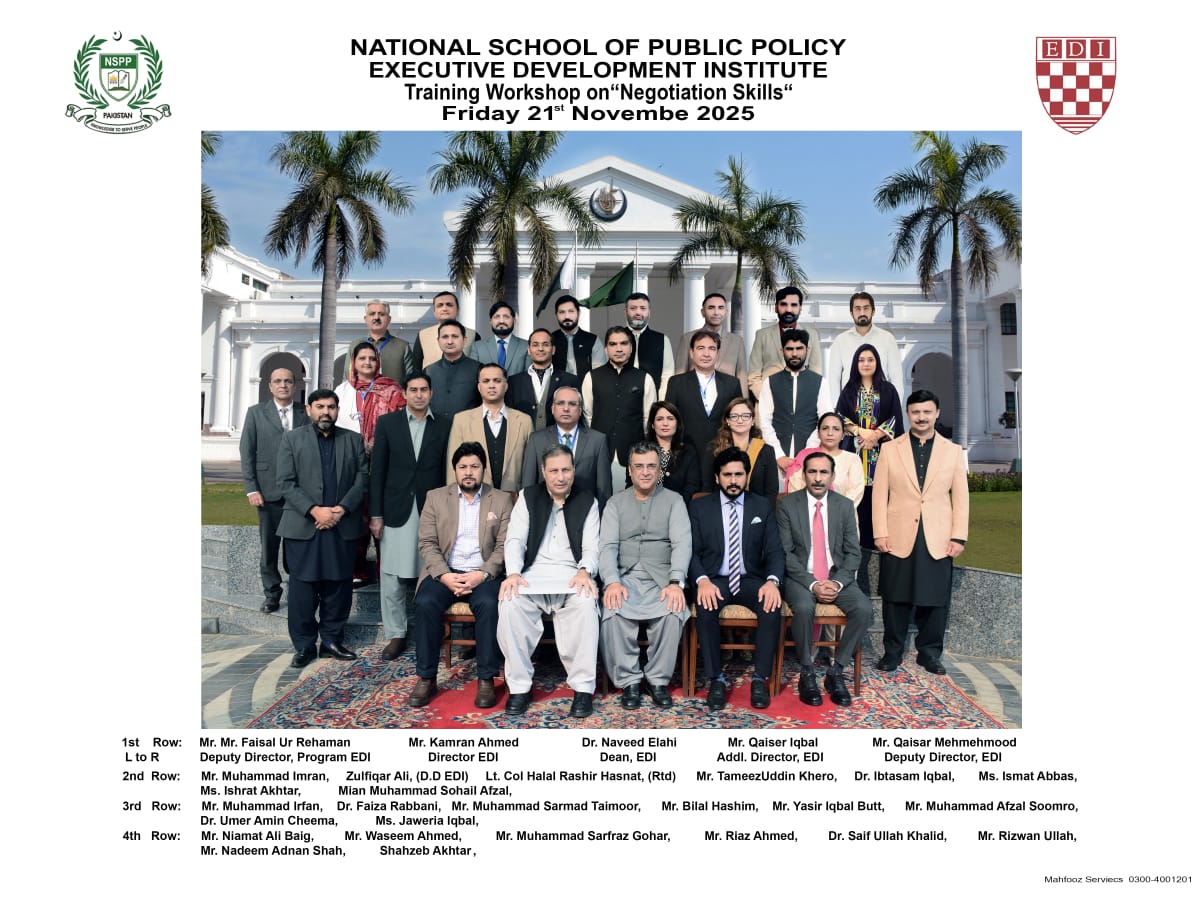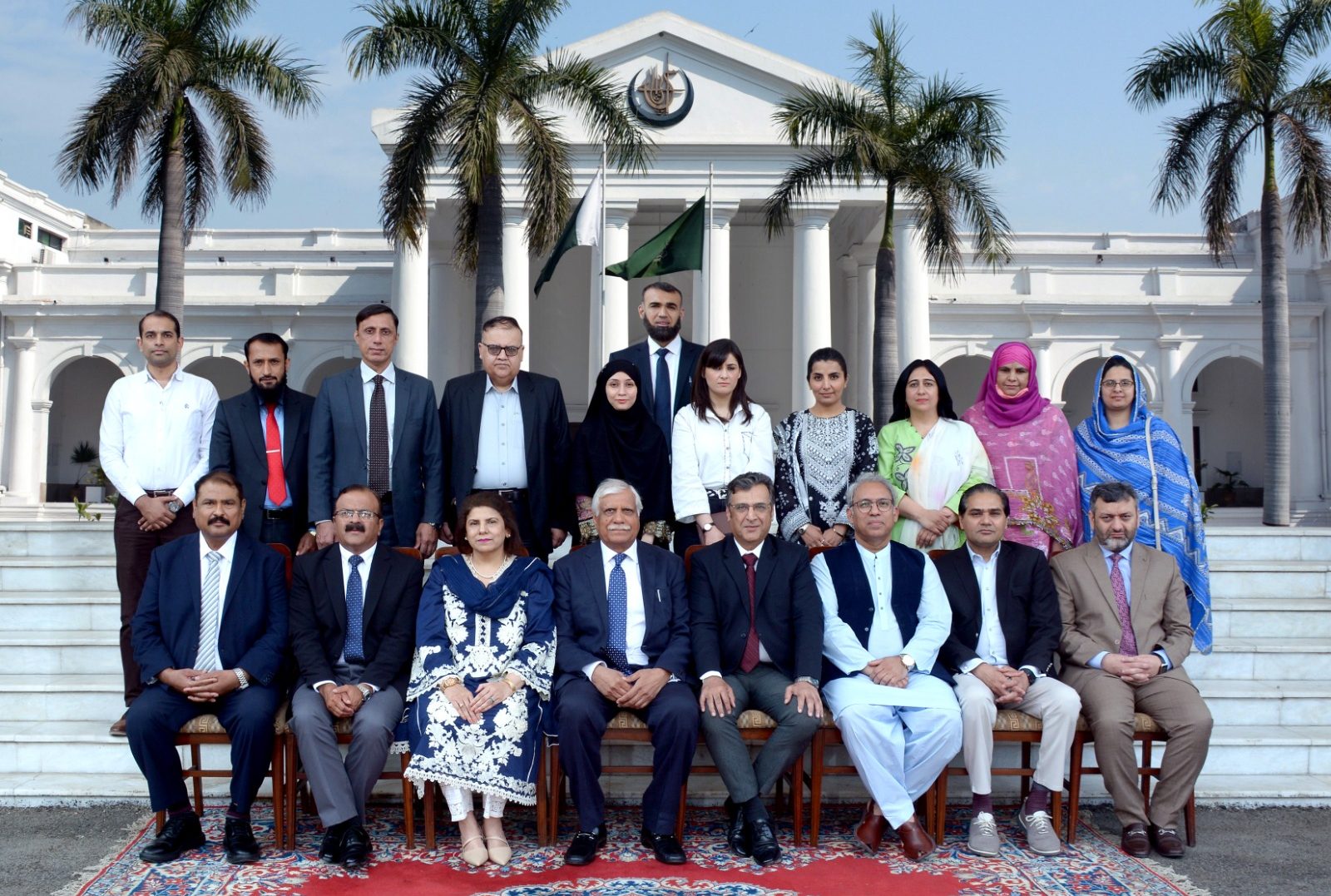
The National Institute of Public Policy (NIPP) organised a roundtable discussion on “Challenges of Internal Security: Need for Implementation of National Security Policy and Strategy” in Lahore on Tuesday, 23rd April 2024. The panel featured prominent experts and practitioners including Lt General Bilal Akbar (Retd), former Corps Commander and DG Rangers Karachi, Mr. Shaukat Javaid former IG Police, Punjab, Dr. Akbar Nasir Khan, IG Police Islamabad, Muhammad Amir Rana, Security Analyst, Director PIPS and Dr. Shabana Fayyaz, Chairperson DSS , QAU. The session was moderated by Dr. Naveed Elahi, Dean NIPP. It was attended by Research Associates and Research Fellows of NIPP, including Dr. Saifullah Khalid, Ms Sabina Babar, Dr. Sumreen, Dr. Ali Abbas, Habibullah Khan Addl. Director, Mr. Sajid Sultan and others. Dean, Dr. Elahi stated that Pakistan was facing serious internal security challenges since long; terrorism and insurgencies have claimed thousands of lives and have become existential threat to the country. Ironically, at least four National security policies and plans have been formulated during the last one decade, but their implementation is problematic. Situation has gone from bad to worse. To address these multifaceted challenges effectively, Pakistan must adopt a comprehensive and integrated national security policy and CT strategy to address its internal and external security concerns.
Ms. Sabina Babar presented a research report on spike in terrorism and slackness in implementation of security policies. The discussion highlighted the causes and effects of Pakistan’s persistent internal security threats like terrorism, extremism, insurgencies, sectarianism etc. The panelists identified lack of political will as the main reason of non-implementation of multiple security policies drafted over the last decade.
The panelists underscored the need for political will to implement national security policies across successive governments, and to ensure parliamentary oversight to ensure continuity of these policies. Furthermore, they stressed the need for united endeavours of civil and military forces to play their roles in a sustained manner. The panelists recommended a unified counter-terrorism strategy in coordination with military, civilian law enforcement and judiciary. Strengthening intelligence coordination, capacity building of provincial counterterrorism departments, and choking terrorist financing were highlighted as critical measures. NIPP aims to build consensus on actionable strategies emerging from the roundtable for effective policy implementation